"Who Gets to Tell the Story?"
Hashima Island and Contested Heritage — GCSE Lesson Plan (50 minutes)
What you need to know before teaching this lesson:
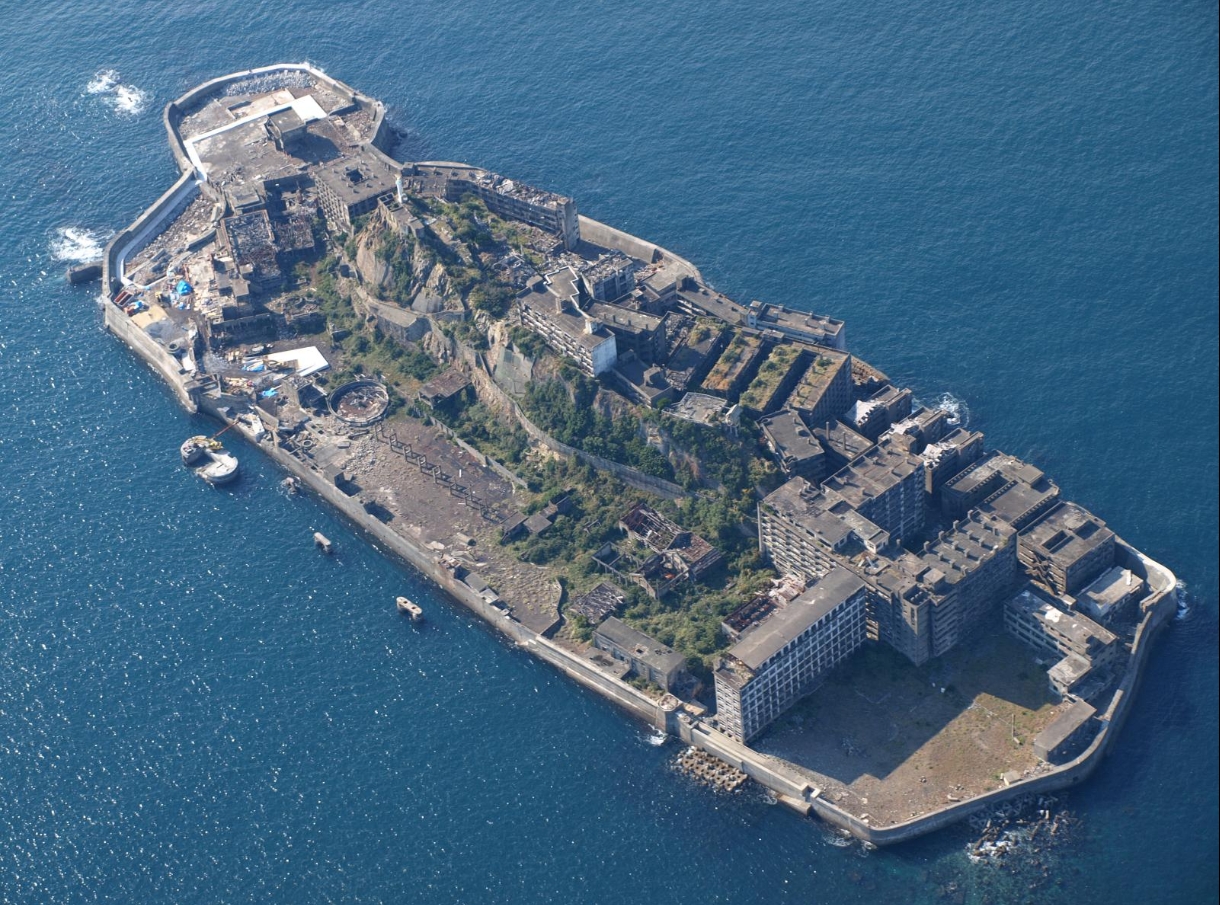
In 2015, Japan secured UNESCO World Heritage status for Hashima Island and other industrial sites, promising to tell their "full history" including the experience of forced labourers. By 2021, UNESCO said Japan had not kept that promise. This lesson uses four real documents — two from UNESCO, one from Korea, and one from a Japanese heritage organisation — to let students trace how an international commitment unravelled. The analytical skills are the same ones your students use for any GCSE source analysis question.
For full background, see the Teacher Guidance document.
At a Glance
| Key Stage | GCSE / KS4 (Ages 14–16) |
|---|---|
| Duration | 50 minutes |
| Sources used | Source Sheet: A, E, F, G, K, N |
| Curriculum link | AQA GCSE History — "Britain: Migration, Empires and the People" (Paper 2A/C) |
| Key concepts | Interpretation, evidence, causation, significance |
| Prior knowledge | Basic understanding of what a World Heritage Site is. No Japan knowledge required. |
Learning Objectives
By the end of this lesson, students will be able to:
- Analyse how different institutions construct competing narratives about the same historical site
- Evaluate the reliability and utility of digital sources by examining provenance, purpose, and institutional connections
- Explain why heritage interpretation is contested and what that reveals about the relationship between history and power
Curriculum connections
AQA GCSE History — Britain: Migration, Empires and the People (8145/2A/C): The source analysis skills practised here transfer directly to the Paper 2 Section A question types: "How useful is Source X to a historian studying...?" (8 marks) and "How do interpretations differ?" Students practise evaluating provenance, purpose, and utility — the same skills assessed in the exam.
Edexcel GCSE History — Paper 2 / Paper 3: The "How useful is Source X for an enquiry into...?" (8 marks) maps directly to the Phase 3 writing task. For Paper 3 interpretation questions ("How far do you agree with Interpretation X?" — 16+4 SPaG), adapt the task: "How far do you agree with the interpretation that Japan has failed to tell the full history of Hashima Island? Use Sources E and F and your own knowledge."
OCR GCSE History — Interpretations / History Around Us: The competing narratives here model the "How far do Interpretations A and B differ?" (8 marks) and "How far do you agree?" (20 marks) question types. The site management analysis connects to OCR's History Around Us requirements.
Second-order concepts: Interpretation (why do sources disagree about the same events?), causation (what produced the gap between the 2015 commitment and the 2021 criticism?), evidence (how do we evaluate competing claims when both sides cite evidence?).
Transferable exam skills: Identifying purpose and audience, evaluating utility vs. reliability, recognising language as evidence of perspective, understanding institutional context.
Lesson Plan
Starter: Two descriptions, one island (5 minutes)
Project two descriptions of the same place — Source A's description of Hashima and Source G's description. Do not reveal they describe the same island.
Ask: Could these be about the same place?
Reveal they are. The lesson question: Why do these accounts differ so radically?
Main Activity (40 minutes)
Phase 1 — Source analysis in pairs (15 minutes)
Distribute three source pairs to different groups:
- Pair 1: Source E (UNESCO 2015) and Source F (UNESCO 2021) — what changed?
- Pair 2: Source A (official heritage) and Source K (Truth of Gunkanjima) — same organisation, different audiences
- Pair 3: Source G (Korea.net) and Source K (Truth of Gunkanjima) — directly opposing claims
Each pair completes a structured analysis (download worksheet):
| Question | Source 1 | Source 2 |
|---|---|---|
| Who made this? | ||
| Who is it for? | ||
| What does it claim? | ||
| What evidence does it cite? | ||
| What does it not mention? |
Phase 2 — The institutional connection (10 minutes)
Timing note: This is the tightest phase. If students need more time with Source N, borrow 5 minutes from Phase 3 writing. Alternatively, distribute the Source N extract as pre-reading homework — students arrive having read it, and Phase 2 becomes a discussion-only phase.
Introduce Source N (download classroom extract — the section identifying Katō Kōko's role in Sources A, K, and the IHIC).
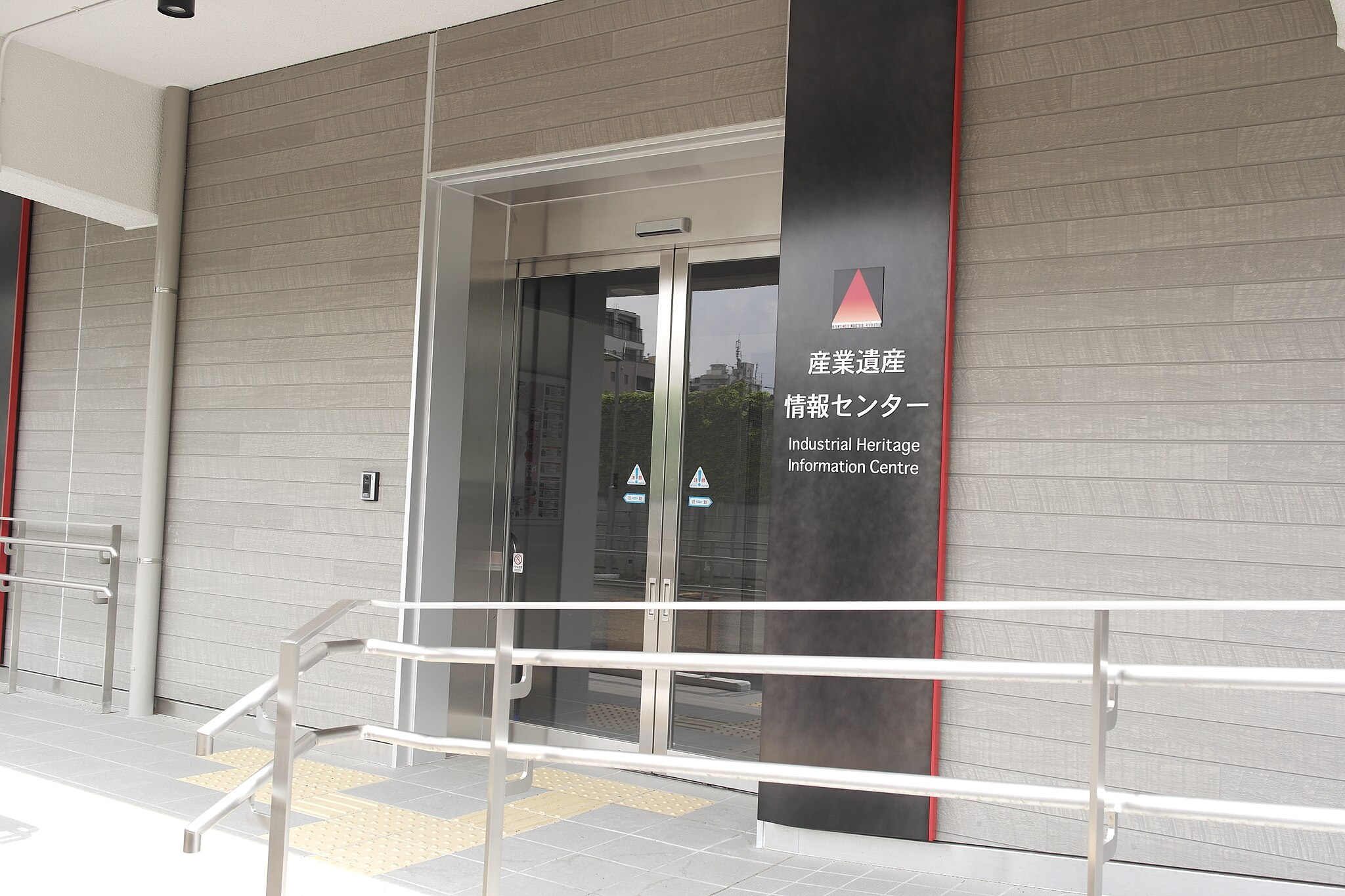
Whole-class discussion: How does knowing the institutional connection between these sources change how you read them?
Language and gatekeeping: Note that the IHIC's primary materials, the "Truth of Gunkanjima" website (Source K), and the official heritage site (Source A) all exist in Japanese first and English second. The Korean-language version of Source K was added specifically to counter Korean criticism — making it a source about the dispute as well as a source in it. When students analyse these sources, they are working with translations and English-language adaptations. The original Japanese content is more extensive. This is itself a form of the "soft gatekeeping" the lesson examines: access to the full conversation requires reading Japanese.
Phase 3 — Structured writing (15 minutes)
GCSE-style question:
"How useful are Sources A and G for an enquiry into how governments use heritage sites to shape historical memory?"
Provide sentence starters for lower-attaining students (download printable cards):
- "Source A is useful because it reveals..."
- "However, Source A is limited because..."
- "Source G is useful for a different reason..."
- "When we consider both sources together..."
Extension: Compare to a British example — a heritage site, statue, or museum where the interpretation has been contested.
Plenary: What sources do (5 minutes)
Key concept: sources are not neutral containers of information. Every digital source was created by someone, for a purpose, within an institutional context. The skill is not finding the "right" source — it is understanding what each source is doing and whose interests it serves.
Extension / Homework
Option A (Exam practice): Using Sources E and G, answer: "How do these two sources differ in their interpretation of Hashima's significance?" [8 marks]. Write under timed conditions (10 minutes).
Option B (Research): Source K and Source A are both managed by the same organisation (the NCIH) and the same director (Katō Kōko). Read Source N (Johnsen, Asia-Pacific Journal, 2021 — Part 1 only) and write a paragraph explaining what this connection reveals about how heritage narratives are constructed across multiple platforms.
Differentiation
Support: Pre-assign the simplest source pair (Pair 1: E and F — both from UNESCO, clearest contrast). Provide a glossary card defining: UNESCO, World Heritage, inscription, interpretation, forced labour, provenance, utility. For the writing task, provide sentence starters.
Stretch: After Phase 2, ask: "Source K includes testimonies from people who were children on Hashima during the wartime period. The Korean government (Source G) cites testimony from Korean survivors. Neither set of witnesses is lying. How can a historian work with contradictory testimony from sincere witnesses?"
Assessment opportunities
Formative: Structured analysis completion during Phase 1; pair discussion during Phase 2.
Summative: Phase 3 writing task (markable using AQA mark scheme for the "How useful..." question type).
Extended: Homework options A or B.
Mark scheme guidance (AQA-aligned)
Level 4 (7–8 marks): Student evaluates the utility of both sources, considering content, provenance, and purpose. Uses contextual knowledge to assess what each source reveals and what its limitations are.
Level 3 (5–6 marks): Student analyses both sources, explaining how provenance and purpose affect utility. Makes some reference to context. May treat one source more fully than the other.
Level 2 (3–4 marks): Student identifies useful content from both sources but does not analyse provenance or purpose in depth. May describe what sources say rather than evaluating what they reveal.
Level 1 (1–2 marks): Student makes simple comments about one or both sources, identifying basic content without analysis.
SEND and accessibility considerations
Dyslexia: The Source N extract is the most text-dense resource in this lesson. If printing, use cream paper, minimum 12pt font, and 1.5 line spacing. The sentence starters card (PDF) provides structured support for the writing task.
EAL: Pre-teach the following terms before the lesson: UNESCO, World Heritage, inscription, interpretation, forced labour, provenance, utility. These appear in the glossary card suggested in the Differentiation section.
Visual timetable: Display the four-phase structure (Starter → Paired analysis → Class discussion → Writing) as a visual schedule. The transition from Phase 1 (pairs) to Phase 2 (whole class) is the most disruptive — give a 1-minute warning.
Motor accessibility: If students access sources on devices, ensure interactive elements meet 44×44px minimum touch targets. The downloadable source packs avoid this issue entirely.
Teaching this as part of the mini-unit?
This is Lesson 2 of the three-lesson mini-unit. If students completed Lesson 1 ("What Story Sells?"), open by asking: "Last lesson we looked at five tourism sources. None of them mentioned forced labour. Today we're going to find out why." This bridges the interpretive framing concept from Lesson 1 into the institutional analysis of Lesson 2.
Downloads
Download this lesson's resources.
Lesson Slides: "Who Gets to Tell the Story?" PPTX
Student Worksheet: Source Analysis Sheet PDF
Student Worksheet: Sentence Starters PDF
Source N Classroom Extract PDF
Source Sheet: 14 Digital Sources PDF
GCSE Source Pack: Key Excerpts for Offline Use PDF
Last updated: March 2026
Lesson Plans